Not a Presumption, But Only an Inference – SC Clarifies Use of ‘Res Ipsa Loquitur’
Just Saying “The Facts Speak for Themselves” Isn’t Enough, You Still Have to Prove Negligence

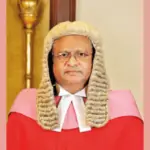
In a recent ruling, the Supreme Court has clarified the application of the maxim res ipsa loquitur—meaning “the thing speaks for itself”—in accident-related negligence claims. Delivering the majority judgment, Justice Janak De Silva held that the maxim does not relieve a plaintiff of the burden of proving negligence and that it does not create a legal presumption in favour of the plaintiff, it merely permits a prima facie inference of negligence based on the surrounding facts. He also warned against courts engaging in speculation or conjecture under the guise of this maxim.
The case involved a medical doctor who was involved in a motor accident on Havelock Road around 3 a.m. while responding to an emergency call. The doctor’s vehicle collided with a newly constructed traffic island placed in the middle of the road by the Colombo Municipal Council. He suffered serious injuries and filed a lawsuit seeking Rs. 10 million in damages for personal injuries and Rs. 150,000 for vehicle damage.
The District Court found in his favour, awarding the full sum, and the High Court of Civil Appeal upheld this decision. The High Court notably relied on res ipsa loquitur, pointing out that the doctor had stated he did not know how the accident happened—thus, the very fact of the accident, in its view, spoke for itself and justified an inference of municipal negligence.
Doctor’s Own Negligence to Blame
However, Justice Janak De Silva disagreed with this reasoning. He pointed out that the road was 46 feet wide, divided into four lanes, with the traffic island occupying just three feet in the middle. The plaintiff had ample space—over 21 feet on his side of the road—to drive safely. Evidence showed that he was driving above the speed limit and close to the middle of the road at 3 a.m., and he had admitted to being aware of the island’s existence prior to the accident.
Justice De Silva ruled that this conduct was negligent and dismissed the argument that the accident was solely caused by any defect in the construction or lack of signage. Crucially, he also found that the doctor had failed to separately establish negligence on the part of the Municipal Council. “The Plaintiff must explain how the Defendant can be held to be negligent when the Plaintiff had clearly driven the car close to the middle of the road… at about 3 a.m.,” he noted.
“…it can be safely said that the maxim does not relieve the plaintiff of the burden of proving negligence. Neither does it raise any legal presumption in his favour. It applies to the method by which a plaintiff can advance an argument for purposes of establishing a prima facie case to the effect that in the particular circumstances the mere fact that an accident has occurred raises a prima facie factual inference that the defendant was negligent. How cogently those facts speak for themselves will depend on the facts and circumstances of each case…” – Justice Janak De Silva
A Divided Bench
This ruling was delivered by a divided bench. Justice Thurairaja found both parties negligent under the Law Reform (Contributory Negligence and Joint Wrongdoers) Act, reducing the awarded damages accordingly. However, the majority opinion, delivered by Justice Janak De Silva and agreed to by Justice Shiran Gooneratne, rejected this approach. Thus, the majority ultimately ruled that contributory negligence could not be considered, leading to the dismissal of the doctor’s claim.
Contributory Negligence
Justice Janak De Silva dedicated a significant portion of his judgment to clarifying the legal requirements surrounding contributory negligence and the apportionment of damages. He acknowledged that Section 3(1) of the Law Reform (Contributory Negligence and Joint Wrongdoers) Act No. 12 of 1968 permits courts to apportion damages where both the plaintiff and defendant are at fault. However, he firmly stated that this statutory provision does not empower the court to apportion damages unless contributory negligence is specifically pleaded and framed as an issue at trial.
“…Contributory negligence is a specific defence to an Aquilian action. It must be specifically pleaded and raised as an issue at the trial. There was no plea of contributory negligence in the pleadings and was not an issue on which trial proceeded in this action…” – Justice Janak De Silva
Case No: SC Appeal 117/2016 [Decided on 21.02.2025]
Before: S. THURAIRAJA, PC, J.(Dissenting) A. L. SHIRAN GOONERATNE, J. AND JANAK DE SILVA, J (Majority)