LTs don’t have to strictly follow evidence rules, but should still use them as a guide to stay fair and reasonable.
Labour Tribunals Have Wider Power, Their Decisions Stand Unless plainly wrong – SC
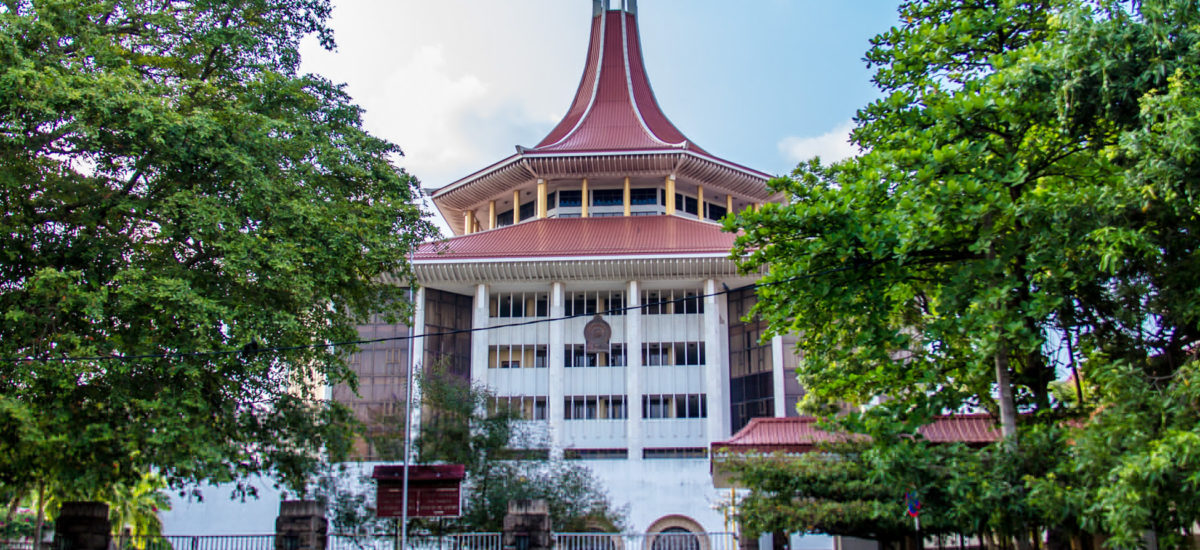
LTs don’t have to strictly follow evidence rules, but should still use them as a guide to stay fair and reasonable.
Delivering the majority judgment, Justice Yasantha Kodagoda PC declared that the Supreme Court will not disturb findings of fact by a Labour Tribunal unless they are “manifestly perverse.” He observed that “though a Labour Tribunal is not obliged to adhere to the rules of evidence or provisions of the Evidence Ordinance, it is advisable that as far as it is reasonably possible, every effort should be made to be guided by the principles of evidence…”
He also reminded that in industrial disputes, the powers of a tribunal are wider than those of an ordinary court: “the jurisdiction of a Labour Tribunal is much wider than that of the District Court,” since the Industrial Disputes Act authorises tribunals to make any order that appears “just and equitable.”
The incident: six steel tubes, a can, and a long-serving worker
The dispute began at Ceylon Cold Stores PLC’s Ranala premises. Kannaariam Nadarajah, a service bay operator and driver with 19 years of unblemished service, was accused of misconduct on 1st October 2017.
According to the company, security officer W.A.S. Wijesinghe saw a man in a blue T-shirt and white cap throw six steel tubes and a five-litre aluminium can over the factory wall. Later, at the security post, Wijesinghe allegedly identified Nadarajah as the culprit.
The goods were recovered, and no actual loss was suffered, but the company treated the act as attempted theft. The following day, Nadarajah was questioned by the company’s Security Manager U.H.D. Dharmapriya, in the presence of Chief Security Officer R.M.A.K. Ratnayake. They claimed he broke down and confessed, though he later denied it in writing. After a domestic inquiry by an external officer, he was dismissed on 24th November 2017.
The employee’s defence
Nadarajah denied the charge from the start. He said he never threw company property over the wall and had been pressured to admit to something he did not do. He stressed his loyalty and spotless record, which even the company’s HR officer conceded.
Through his union, he went before the Labour Tribunal in Kaduwela. The tribunal noted that the only eyewitness, Wijesinghe, never gave evidence—neither at the domestic inquiry nor before the tribunal. Instead, the company relied on what Ratnayake and Dharmapriya said they were told. This was “hearsay” and, in Dharmapriya’s case, even “double hearsay.” The tribunal also pointed out the improbability: if the guards really saw a worker throwing property over the wall, why did they let him sign off and walk away without questioning him or calling the police?
On 8th March 2019, the Tribunal ruled that the dismissal was unjustified. Nadarajah was ordered reinstated with full back wages. The High Court in Homagama affirmed this in August 2020.
The Supreme Court’s majority view
The company appealed again. In the Supreme Court, Justice Kodagoda, joined by Justice Mahinda Samayawardena, agreed with the tribunal’s findings. He said the company failed to prove the charge even on the civil standard of a “balance of probability.” The supposed confession was doubtful, and the absence of the sole eyewitness cast a long shadow.
He concluded: “It is evident that, the Labour Tribunal’s findings that the Appellant company on a balance of probability had failed to establish that the termination of employment of Nadarajah is just and equitable, is in the view of this Court correct. Certainly, no perversity can be attributed to such finding. Thus, there is no basis to set aside the findings of both the Labour Tribunal and the High Court.”
But the majority drew the line at reinstatement. While unjust dismissal usually entitles a worker to return to his job, the Court stressed that the remedy is not automatic. On the doctrine of “loss of confidence,” Justice Kodagoda recalled earlier rulings: “the mere assertion by the employer is not sufficient to justify the termination of a workman on the ground of loss of confidence. When such an assertion is made it is incumbent on the Labour Tribunal to consider whether the employer’s apprehension is well founded.”
Yet, after nearly eight years, the Court held that trust between the parties had eroded. Reinstatement would not be “practicable” or promote harmonious relations. Instead, Nadarajah was granted back wages plus continuing compensation until his retirement.
The dissenting voice
Justice P. Padman Surasena (as he was then, now the Chief Justice) disagreed. He insisted that the company’s case was proved. He pointed out that industrial misconduct need not be proved beyond reasonable doubt like in a criminal trial: “Although the nature of misconduct may amount to the commission of a criminal act involving moral turpitude, even such misconduct need not be proved with proof beyond reasonable doubt as in a criminal case.”
For him, the evidence of two senior officers who testified that Nadarajah confessed was more credible than Nadarajah’s “bare denial.” As he put it: “The mere bare denial in my view has not been capable of negating the effect of the evidence adduced by the Employer. Thus, in the above circumstances, I am of the view that on a balance of probability, the Employer has proved that the Employee was concerned with this theft.”
The final outcome
The Court therefore delivered a split decision: the majority held that the dismissal was unjustified but refused reinstatement, ordering instead a package of back wages and monthly compensation until retirement. The dissent maintained the dismissal was valid.
Case No: SC Appeal No. 17/2022 [Decided on 08.05.2025]
Before: P. Padman Surasena, J. Yasantha Kodagoda, P.C., J. Mahinda Samayawardena, J.