SC rules against politically driven promotions at SLBC
Constitution Guarantees Equal Protection, Not Equal Violation
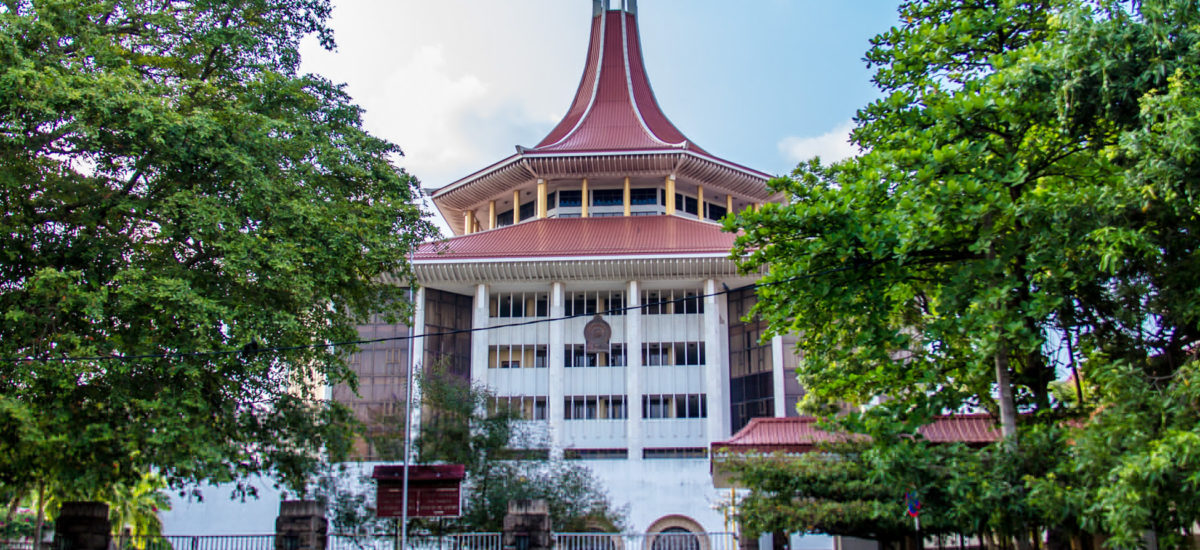
The Supreme Court ruled that the Constitution ensures equal protection of the law, not equal violation. The case arose after SLBC employees challenged promotions and salary hikes given in May 2015 to colleagues allegedly favoured for political reasons. The Respondents argued that the petitioners themselves had earlier benefited from similar irregular promotions under a previous administration. The Supreme Court rejected this claim, explaining that the principle of equality cannot be used to justify repeating unlawful or politically motivated actions.
The case began when a group of SLBC employees and trade unions filed a Fundamental Rights application challenging the 2015 decision of the SLBC Board to promote 33 employees and award personal salary increments to another 24, allegedly based on their political ties. The petitioners claimed the promotions were granted without calling for applications, without interviews, and without following any structured recruitment scheme.
The respondents countered that the SLBC Law No. 5 of 1974 empowered the Board to make such appointments and promotions. But the Supreme Court rejected that defense, making it clear that while the law gives the Board authority, it does not grant it “unfettered discretion.” The Court emphasized that the Board holds its powers in trust for the people of Sri Lanka, not for politicians or personal favourites.
In the words of Justice Janak De Silva, “The absence of a scheme of recruitment is not a warrant for the Board of Directors to make promotions and grant salary increments based on political considerations.” He declared that the promotions and increments made on 25 May 2015 were “arbitrary and based purely on political affiliation.”
The Supreme Court therefore ruled that all such promotions and salary increments were null and void and that the SLBC Board members responsible had infringed the fundamental rights of the petitioners under Article 12(1) of the Constitution. The Court further ordered six former SLBC officials to pay compensation personally to the affected employees and directed the present SLBC Board to create a proper Scheme of Recruitment and Promotion within six months.
Key Principles: How an HR Commission Complaint Can Pause the One-Month Deadline
The Supreme Court also in this case clarified that if someone files a complaint with the Human Rights Commission within a month of a rights violation, the usual one-month limit to file a Fundamental Rights case in court can be paused. But this applies only if the Commission actually starts looking into the complaint, not just because a letter was sent.
“…In Thilangani Kandambi v. State Timber Corporation & Others (S.C.F.R. Application No: 452/2019; S.C.M. 14.12.2022 at page 9), I identified four key principles on the application of Section 13(1) of the Act in relation to Article 126(2) of the Constitution. They are as follows:
a) The initial view was that mere production of a complaint made to the HRCSL within one month of the alleged infringement is sufficient to get the benefit of the provisions in section 13(1) of the HRCSL Act [Romesh Coorey v Jayalath (2008) 2 Sri.L.R. 43, Alles v. Road Passenger Services Authority of the Western Province, (S.C.F.R. 448/2009, S.C.M. 22.02.2013)].
b) However, the present position is that a petitioner must show evidence that the HRCSL has conducted an inquiry regarding the complaint or that an inquiry is pending. Simply lodging a complaint is inadequate. [Subasinghe v. Inspector General of Police, SC (Spl) 16/1999, S.C.M. 11.09.2000; Kariyawasam v. Southern Provincial Road Development Authority and 8 Others, (2007) 2 Sri.L.R. 33; Ranaweera and Others v. Sub-Inspector Wilson Siriwardene and Others (2008) 1 Sri.L.R. 260; K.H.G. Kithsiri v Faizer Musthapha, (S.C.F.R. 362/2017, S.C.M. 10.01.2018); Wanasinghe v. Kamal Paliskara and Others, (S.C.F.R. 216/2014, S.C.M. 23.06.2021)].
c) A party cannot benefit from the provisions in section 13(1) of the HRCSL Act where the complaint to the HRCSL is made one month after the alleged violation [Alagaratnam Manoranjan v. G.A. Chandrasiri, Governor, Northern Province, (S.C.F.R. 261/2013, S.C.M. 11.09.2014)]. d) The provisions of section 13(1) of the HRCSL are not available to a petitioner who has made a complaint to the HRCSL only to obtain an advantage by bringing his application within Article 126(2) of the Constitution [K.H.G. Kithsiri v Faizer Musthapha, (S.C.F.R. 362/2017, SCM 10.01.2018)]…” – Justice Janak De Silva
Case No: S.C.F.R. Application No: 327/2015 [Decided on 05.08.2025]
Before: Thurairaja, PC, J., Janak De Silva, J., Mahinda Samayawardhena, J.